
Getting Married in India: The Legal & Cultural Guide
Navigating marriage in India? This guide covers legal requirements, 30-day residency & waiting periods, essential documents, costs, and cultural wedding insights for…

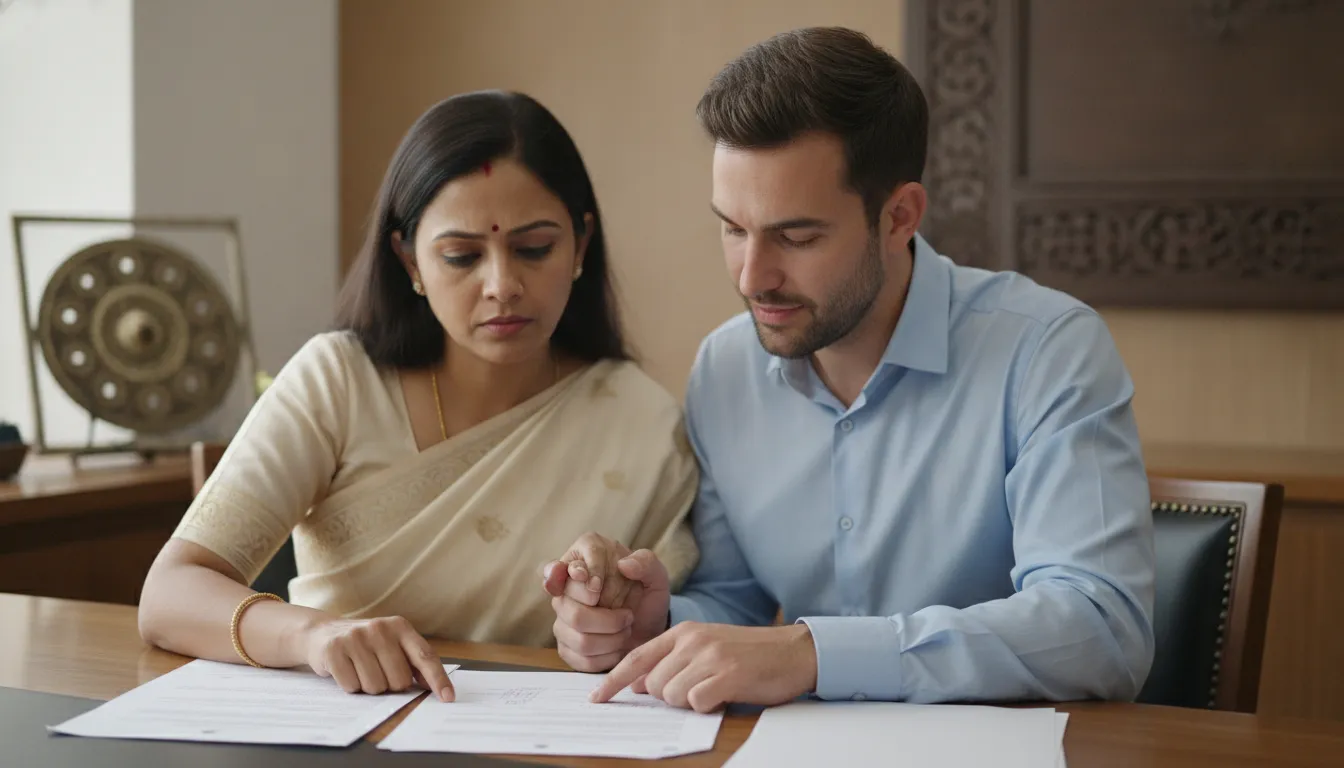
TL;DR: Getting married in India involves several steps, including a 30-day residency rule for at least one partner and another 30-day waiting period to get your marriage certificate after the wedding. This means you should plan to stay in India for at least 60 days in total for the legal process. While administrative fees are low (e.g., ₹150 under the Special Marriage Act), a full Indian wedding can be very costly, with many families spending millions of rupees on celebrations lasting up to a week.
Planning a wedding in India, especially if you split your time between countries, can seem like a grand adventure with many layers. While it’s true that the legal steps can take time and involve specific customs, the reward is often a vibrant, unforgettable celebration filled with rich traditions. For international couples, understanding these timelines and legal requirements is crucial for a smooth journey, ensuring you stay well-connected and informed throughout the process.

What Kinds of Weddings Can You Have in India?
India recognizes two main types of weddings as legally valid: civil ceremonies and religious weddings. Many people choose one of these options, often combining them with cultural celebrations.
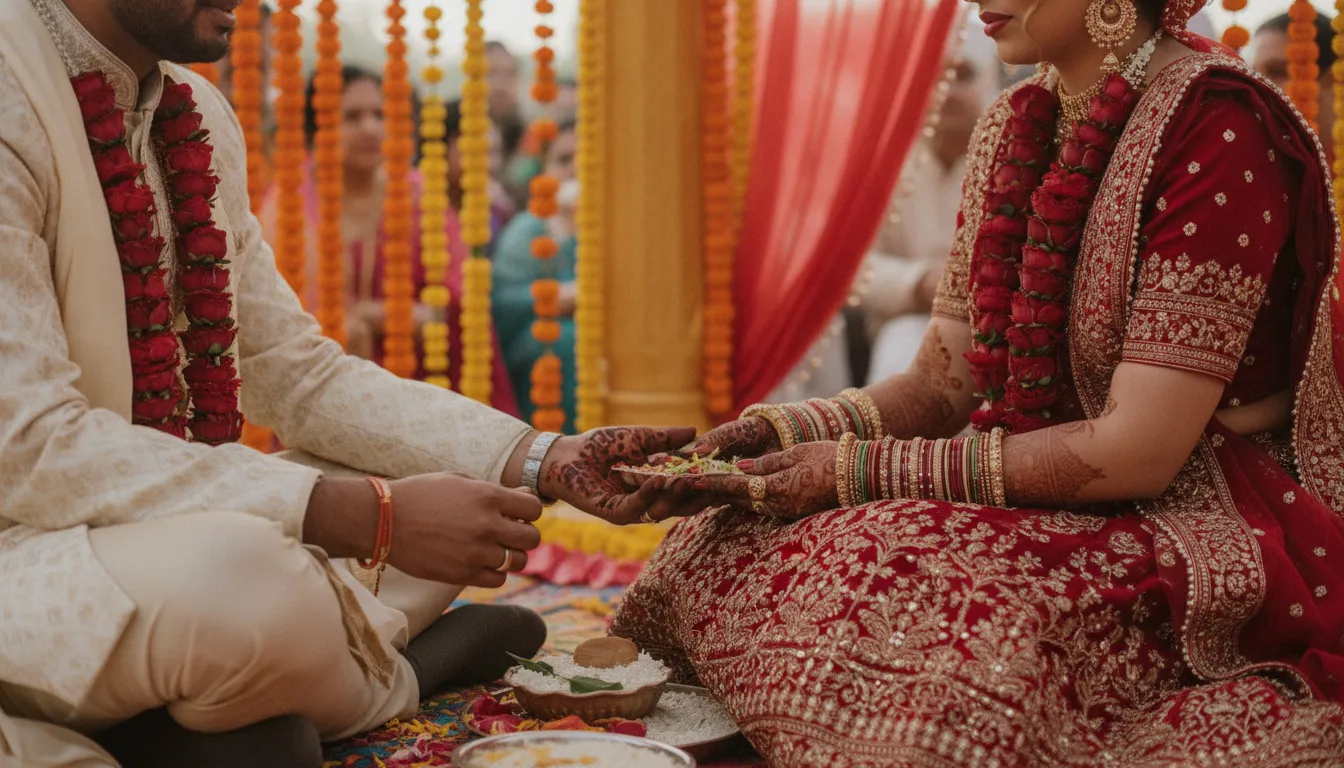
Civil ceremonies take place at a marriage registrar’s office. This is a straightforward legal process. Religious weddings are very common and are usually performed according to the couple’s faith. For most religions, the marriage certificates given by the religious authority are enough to prove the marriage. However, for couples who are Hindu, Jain, Sikh, or Buddhist, it is also required to get a marriage certificate from the local marriage registrar in addition to their religious ceremony. This ensures their union is recognized by law. It’s important to note that same-sex marriages are not legally recognized in India.
What Are the Rules for Getting Legally Married in India?
To get legally married in India, certain rules must be followed, especially those laid out in the Special Marriage Act of 1954. One key rule is that at least one person in the couple must have lived in India for 30 days before they can apply for marriage. You will need to show proof of this from a certificate issued by the local police station.
If you are a foreign national marrying an Indian citizen, you will need some extra documents, but you do not need to become an Indian citizen to tie the knot. India also accepts marriage certificates from other countries, so if you got married abroad, you don’t need to register that marriage again in India. For couples who do not live in India, it might be simpler to get legally married in their home country first and then have a ceremonial blessing or traditional wedding in India. This way, they can still enjoy the cultural experience without the longer legal process in India. For those splitting their life between countries, like the UK and India, planning your wedding requires careful attention to these legal details and timelines.
What Paperwork Do You Need to Get Married in India?
The documents needed for getting married in India can change based on the type of wedding you plan. However, there is a core set of papers that everyone will need before their wedding day. These documents help confirm your identity, residency, and eligibility to marry.
You will need to gather the following documents:
- Proof of Residency and Address: At least one of you must show proof of living in India for at least 30 days before the marriage application. This could be a certificate from a local police station.
- Valid Passports: Both partners need their current passports.
- Original Birth Certificates: You will both need your original birth certificates.
- Visa or Ration Card: If any foreign partner plans to stay in India for longer than 30 days, they will need a valid visa or ration card showing their allowed length of stay.
- Certificate of No Impediment/Single Status: This official document confirms that you are not already married. You usually get this from your home country’s embassy.
- No Objection Letters: These letters state that you willingly agree to the marriage. You must get them from your home country’s embassy or consulate.
- Divorce Papers or Death Certificate: If you have been married before and are either divorced or widowed, you will need to provide the relevant legal documents.
- Passport-Sized Photographs: Several recent photos of both partners are required for the application.
For a Catholic wedding, you will also need to get a ‘No Objection’ certificate from your local parish priest. This certificate confirms your wedding and allows you to marry in a church in India. You might also need other documents, such as baptism and confirmation certificates.
The Steps to Getting Married
The legal process for getting married in India starts with submitting a Notice of Intended Marriage to your local registry office. Along with this notice, you need to provide proof of one partner’s 30-day residency, certified copies of both partners’ passports and birth certificates, and photographs. Only one person from the couple needs to be present to submit this notice.
If you are a foreign national marrying an Indian citizen, you might also need to see a lawyer. The lawyer can help create an affidavit, which is a sworn statement confirming that you are willingly entering the marriage. This step is sometimes needed if your parents are not present to formally ‘give you away’ in a traditional sense. At the registry office, you will then sign three copies of your notice and confirm your names and addresses with the registrar.
There is a 30-day waiting period after you submit your notice. During this time, anyone can object to the marriage if they have a valid legal reason. If no one objects within this period, you can then be legally married at the same registrar’s office. For the actual wedding, you will need three witnesses. These witnesses must also provide copies of their passports and proof of address.
To get your official marriage certificate India, you need to visit the local marriage registrar’s office, often located in a court or a municipal building. There is another 30-day waiting period after your wedding day before you can collect your certificate. This document is your legal proof of marriage. In total, between the initial notice and getting your certificate, you should plan to spend at least 60 days in India. For those who live overseas, keeping your home phone number active is essential for communication during these long waiting periods; you can find guides on this for countries like the US or Germany.
What Are the Costs for Getting Married in India?
Weddings in India are often grand, drawn-out events, which can lead to high costs. However, what is considered “expensive” is relative. Money from Western countries, for example, might stretch further when converted into Indian rupees (₹). You should expect to pay administrative fees, which vary by region.
If you are a foreign national, a local registrar might ask for up to ₹75,000 (about €1,000) in administration costs. Be cautious, as the actual legal fees under the Special Marriage Act are only ₹150 for an application. If you are having a religious wedding under the Hindu Marriage Act, the registration fee is just ₹100. It is important to make sure you do not pay too much for administrative costs. Usually, you should only pay fees for your marriage application and for getting your marriage certificate India. You might need to pay an additional ₹400 or ₹500 for any affidavits required.

What to Know About Wedding Ceremonies in India?
Once you have correctly applied for your marriage, you are free to choose any venue and location for your wedding ceremony. Many couples decide to get married in beautiful temples, on boats, outdoors in scenic spots, or in churches. You can also have the ceremony directly at the registrar’s office where you applied for your marriage certificate India.
If you are a foreign national, your country’s embassy or consulate can provide more information about wedding requirements and local laws. For example, citizens of Australia can get more details from the Australian High Commission in India. Canadians can contact the High Commission of Canada in India. Those from the United Kingdom can find help at the British High Commission in India, while US citizens can reach out to The U.S. Embassy and Consulates in India. These official sources are key for gathering accurate and up-to-date information for foreign nationals getting married in India.
How Much Does a Full Indian Wedding Cost?
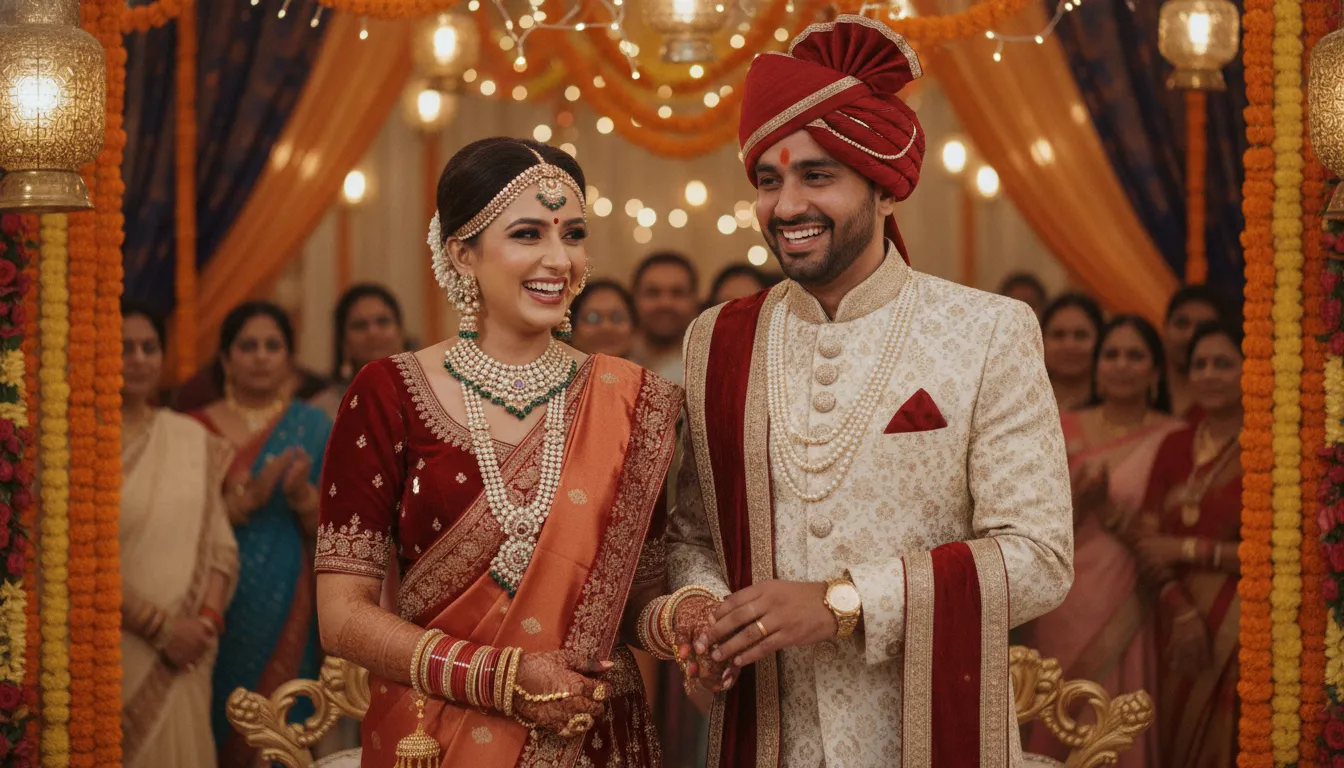
In India, weddings are traditionally seen as a grand, once-in-a-lifetime celebration that reflects well on the prosperity of the families involved. These events often last for up to a week, with different events, meals, and celebrations happening every day. It is common for families to invite over a thousand guests, and some even take out loans to cover the high cost of wedding in India.
Despite these grand traditions, it is possible to have a wedding for the equivalent of just a few hundred Euros. Your budget should match what you can afford. Here are some estimated costs for a 100-person destination wedding in India, to give you an idea of what different parts of the wedding might cost:
| Item | Approximate Cost (₹) |
|---|---|
| Jewelry | 500,000 |
| Venue | 200,000 |
| Saris and Clothing | 200,000 |
| Invitations | 50,000 |
| Transportation | 50,000 |
| Catering | 800,000 |
| Wedding planner | 500,000 |
| Photographer | 50,000 |
| Administrative Costs | 500 |
| Other Decor | 100,000 |
As you can see from the table, catering is often the biggest expense at ₹800,000, followed by jewelry and a wedding planner, both around ₹500,000. Administrative costs, at just ₹500, are a very small part of the overall wedding expenses. Planning for a destination wedding India means thinking about all these details, especially if you’re managing money across borders. For those living abroad, you might also be interested in how to manage finances in places like Australia or Canada.
Where Are the Best Places for a Wedding in India?
India offers many stunning and popular places for weddings, from royal palaces to serene resorts. Here are some of the top wedding locations in India, each offering a unique experience:
| Location | Description |
|---|---|
| Zenana Mahal (Udaipur) | A queen’s palace lit by candles, part of the city palace complex in the ‘City of Lakes’ |
| Lebua Resort (Jaipur) | A resort and spa with French touches in the ‘Pink City,’ famous for its royal palace |
| Coconut Lagoon (Kerala) | An old village in the southern beach area, known for its canals and tea gardens |
| Snow Valley Resorts (Manali) | A peaceful hideaway among pinewood forests in the Himalayas |
| Oberoi Amarvilas (Agra) | A luxury hotel in one of India’s oldest historic cities, very close to the Taj Mahal |
| The Taj West End (Bangalore) | A famous hotel with beautiful gardens and wide lawns |
| Reis Magos Fort (Goa) | The oldest fort in Goa, now restored, in a beach area popular with foreigners and festival-goers |
| Leela Palace (New Delhi) | A luxurious space in a major tourist city, easy to reach for people coming from other countries |
| Krishnam Dhani (Pushkar) | A resort in a city full of famous temples |
| Thaker Farm (Ahmedabad, Gujarat) | A farm in a lively western city, known for its palaces and forts |
These locations provide diverse settings for any Indian wedding traditions, from grand historical sites like the Zenana Mahal in Udaipur to tranquil natural escapes like Coconut Lagoon in Kerala. The Lebua Resort in Jaipur, for example, offers a touch of French style in India’s ‘Pink City.’ The Oberoi Amarvilas in Agra provides luxury near the iconic Taj Mahal, making it a truly special place for a wedding.
What Are Some Common Indian Wedding Traditions?
Indian wedding traditions are rich with meaning and can add a special touch to any ceremony. Most of these customs are optional, allowing couples to choose what feels right for them. Here are a few popular traditions you might consider including in your wedding:
- Mauli: About 15 days before the wedding, a sacred string called a mauli is tied to the groom and his parents. This is done to ask the gods for a safe and happy wedding day.
- Union of Souls: A beautiful symbolic gesture is to tie the bride’s scarf (safi) to the groom’s scarf. This act represents their two souls coming together as one.
- Henna: Traditionally, an Indian bride will have intricate henna designs applied to her hands and feet. This is often done by her female friends and family members, creating a festive atmosphere.
- Sangeet: This is a lively pre-wedding celebration where guests put on a talent show. They perform choreographed dances, musical numbers, and skits to honor the happy couple.
- Bou Bhat: The day after the wedding, the groom’s family and friends host a lunch. This event formally welcomes the bride into the family. During this custom, the groom promises to take care of the bride and gives her a sari as a special gift.
Planning a wedding in India will surely take a lot of effort, time, and money. However, with its vibrant culture and deep-rooted traditions, it is also guaranteed to be a celebration that you, your family, and your friends will remember for many years to come. Understanding things like the cost of living in India and how to legally manage your stay if you are moving to India from the UK can help you prepare for this big life event.
Related reading
Sources
| # | Source | Website |
|---|---|---|
| 1 | Australian High Commission in India | india.highcommission.gov.au |
| 2 | High Commission of Canada in India | international.gc.ca |
| 3 | British High Commission in India | gov.uk |
| 4 | The U.S. Embassy and Consulates in India | in.usembassy.gov |