
Having a Baby in Australia: A Cost Guide for UK Expats
Planning to have a baby in Australia as a UK expat? Understand the costs of prenatal care, delivery, and IVF, plus how Medicare and private insurance impact expenses for your…


TL;DR: Having a baby in Australia involves various costs, especially for UK expats. If you are eligible for Medicare, many public healthcare services, including delivery, can be free. Without Medicare, private costs range widely: prenatal care can cost between $0 and $1,920 for doctor/midwife appointments, with additional tests like NIPT costing $400+. IVF cycles range from $6,000 to $13,000+. A vaginal birth can be $0 to $9,000+, and a C-section $0 to $10,000+. Postnatal hospital stays can reach up to $1,000 per day without insurance. The first year of baby essentials, like nappies, furniture, and clothes, adds hundreds to thousands of dollars to these expenses.
Starting a family in a new country like Australia brings many joys, but also significant financial planning, especially for UK expats. One often-overlooked challenge is staying fully connected to your home country. During a time when new parents face unexpected costs and adjustments in Australia, ensuring your UK phone number remains active can be vital. This helps manage banking needs, maintain family communication, and access essential services back home, easing some of the stress of this costly period.
How Does Healthcare in Australia Work for Pregnant Expats?
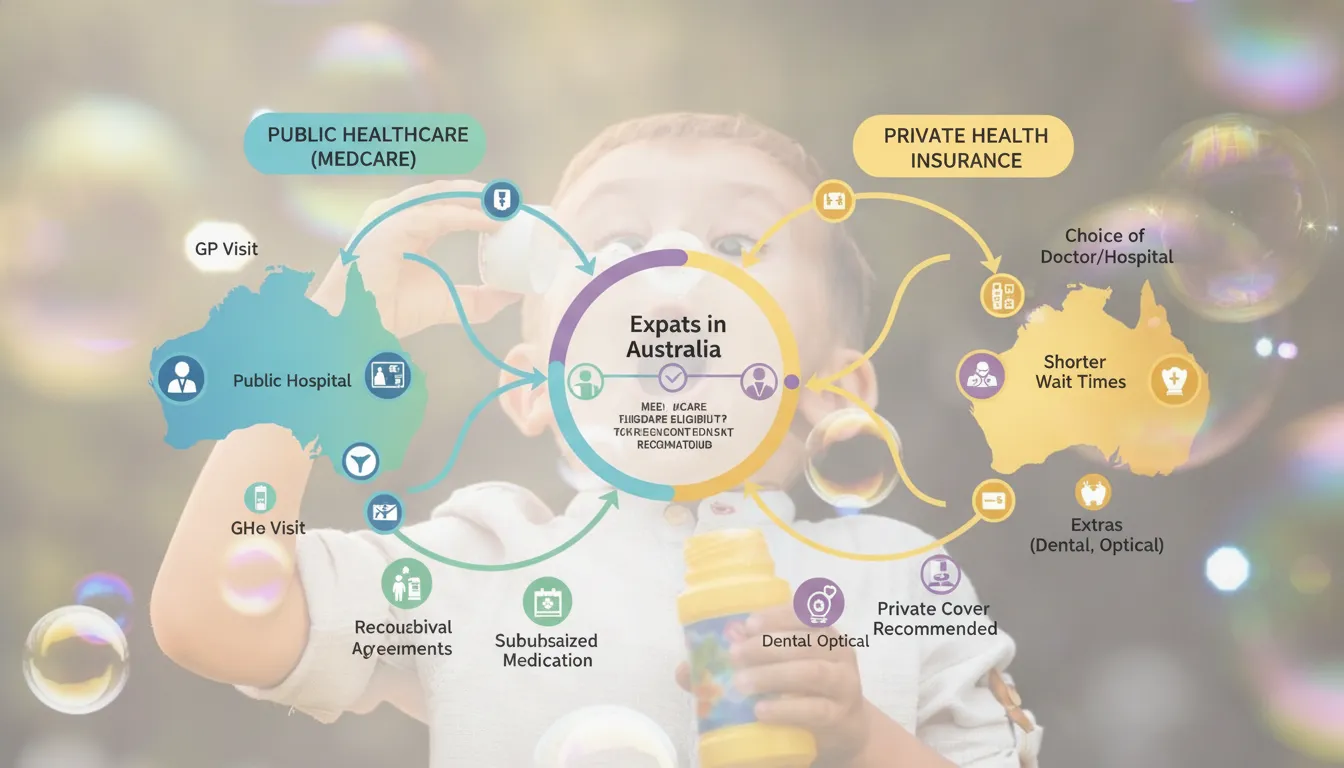
Australia and the United Kingdom have a special arrangement for healthcare. This means that UK expats can receive free medical care if they need urgent treatment. However, you might also be able to gain some access to Medicare. Medicare is a program run by the Australian government. It helps people with the costs of their healthcare.
You can apply for Medicare if you fit one of these descriptions:
- You are a citizen of New Zealand.
- You are an Australian citizen or someone who lives in Australia permanently.
- You are currently applying to become a permanent resident.
- You hold certain types of temporary visas.
If you qualify for Medicare, it will help pay for your doctor visits and appointments with midwives. It also covers important medical scans and blood tests. Additionally, Medicare helps with the cost of vaccines for your child. If you are not able to get Medicare, you will need to buy private health insurance. Another choice is to get Overseas Visitors Health Cover (OVHC).
For UK citizens planning to have a baby in Australia, understanding these healthcare rules is essential. It’s also vital to keep your ties to the UK strong. Our guide on what happens to your number when you move abroad can help you understand how to manage your home country phone number. This is often crucial for banking and other services, especially when you are setting up a new life with a baby.
What Are the Total Costs for Having a Baby in Australia?
The costs to have a baby in Australia can differ a lot depending on your healthcare choices and if you qualify for Medicare. If you are a public patient in a public hospital and eligible for Medicare, many services can be free. However, if you opt for private care or are not eligible for Medicare, costs can quickly add up. Below is a table showing the estimated costs for different stages of having a baby. Remember, these are only estimates. You should always check with healthcare providers directly for the most accurate and up-to-date information.
| Stage of Care | Service | Estimated Cost Range (AUD) |
|---|---|---|
| Prenatal Care | Doctor/Midwife Appointments | $0 – $1,920 |
| Prenatal Tests (e.g., NIPT) | $400+ | |
| Ultrasounds | $0 – $300+ | |
| Birthing Classes | $0 – $500+ | |
| IVF Treatment | One Cycle (before rebates) | $10,000 – $13,000+ |
| One Cycle (with Medicare/private) | $6,000+ | |
| Delivery | Vaginal Birth | $0 – $9,000+ |
| C-section | $0 – $10,000+ | |
| Epidural | $0 – $1,000+ | |
| Homebirth | Up to $5,000 | |
| Postnatal Care | Hospital Room (per day) | $0 – $1,000 |
| Paediatrician Appointment | $0 – $400 | |
| GP Check-up Appointment | $0 – $50 | |
| Baby Essentials (First Year) | Furniture | $0 – $400+ a year |
| Clothes | $0 – $650+ a year | |
| Toys | $250+ a year | |
| Nappies | Over $1,200 a year |
Table data adapted from Finder and Kin Fertility.
This table provides a helpful overview. However, actual costs can vary significantly based on your specific doctor, the hospital facilities, the services you choose, and your eligibility for government support.
How Much is Prenatal Care in Australia?
Prenatal care includes all your doctor visits, ultrasound scans, various medical tests, and any birthing classes you attend before your baby arrives. Prices for these services can change depending on the doctor or hospital you choose, but here is a general guide to help you plan your prenatal care cost Australia.
For initial visits and follow-up check-ups with a general practitioner (GP), the cost usually falls between $30 and $100. Sometimes, these visits can be free if the doctor “bulk bills” them. This means Medicare pays the full amount directly to the doctor, so you don’t have to pay anything out of pocket.
If you choose to see a private obstetrician (a doctor who specialises in pregnancy and childbirth) or a private midwife, each appointment can cost between $100 and $200. For your entire pregnancy, these private appointments could add up to a total of $720 to $1,920. If you decide to use the public healthcare system, you will not have the option to choose your specific doctor.
Should you wish to have a special test called non-invasive prenatal testing (NIPT), you will typically need to pay for it yourself. This is because neither public health insurance nor most private insurance plans cover the cost of NIPT. On average, this test costs between $400 and $450. However, private hospitals may set their own higher rates for this service.
Ultrasounds are provided free of charge if you are covered by public insurance. If you have private health insurance, Medicare will partially cover the cost of ultrasounds. Early in the pregnancy, ultrasounds performed at private hospitals generally cost about $150 to $250. As your pregnancy progresses, the prices for ultrasounds can rise to around $300, even after you receive a Medicare refund.
Birthing classes are also a valuable investment. They can prepare you well for the process of labour and delivery, as well as for the first few days of being a new parent. The cost of these classes can vary greatly, potentially reaching up to $500 in some private facilities, especially if your health insurance does not include specific extras that cover them. However, it is possible to attend birthing classes for free at some public hospitals.
You can purchase private health insurance Australia pregnancy coverage, which typically starts at around $200 per month. Having this type of insurance provides more comfort and the flexibility to choose your own doctor. It can also help reduce some of the out-of-pocket expenses you might otherwise incur during your pregnancy.
What is the Cost of IVF Treatment in Australia?
The IVF cost Australia can vary quite a bit. It depends on factors like the specific clinic you choose, the particular treatments you need, and your own personal situation. On average, a single cycle of IVF typically costs between $10,000 and $13,000. This is the price before any government rebates or private health insurance contributions are applied.
Medicare does offer rebates that can help with IVF treatments. If you are eligible for Medicare and also have private health insurance, your out-of-pocket costs for a single IVF cycle could drop to around $6,000. However, it is quite common for individuals to need five or more IVF cycles before they successfully have a baby. This means that the overall cost of having a baby in Australia through IVF can add up very quickly, becoming a substantial financial commitment.
For UK expats dealing with these high costs, managing finances carefully is incredibly important. Services like Keep My Number are in early access and let you keep your home mobile number active. This number is often needed for online banking, two-factor authentication, and managing other financial accounts back in the UK. Keeping it active can help prevent unexpected problems with banking during financially stressful times. You can learn more about how to keep your UK number abroad for continued access to vital services from your home country.

How Much Does it Cost to Deliver a Baby in Australia?
The cost of delivering a baby in Australia depends heavily on your healthcare status. If you are a public patient giving birth in a public hospital, there are no delivery costs at all. Regardless of the type of birth you choose, whether it’s a vaginal delivery or a C-section, and even if you decide to have an epidural, all these services are covered free of charge.
However, if you have private health insurance, the costs for a natural vaginal birth can range widely, from $380 to over $6,000. If you choose to be a private patient without any insurance, the costs for childbirth can be much higher, potentially reaching nearly $9,000. The exact price can also vary depending on the city in Australia where you live.
An epidural, used to help manage pain during labour, typically costs around $1,000 if you do not have private insurance coverage. If you are covered by private health insurance, the cost for an epidural will be much lower, closer to $500. A C-section (Caesarean section) is generally more expensive than a vaginal birth. With insurance, a C-section can cost between $450 and $7,600. Without insurance, the price can exceed $10,000.
Having a home birth is another option for delivery. However, Medicare will most likely not cover the costs associated with it. If you choose a home birth, your out-of-pocket expenses could be as high as $5,000.
What Are the Costs for Postnatal Care in Australia?
After you give birth, you will need to stay in the hospital for a period, typically see a paediatrician (a doctor specialising in babies), and have a check-up appointment with your general practitioner (GP). These services form your postnatal care cost Australia.
If you are in a public hospital, you will not have to pay anything for these services. However, it is common to stay in a shared room with other new mothers in a public facility.
For those with private health insurance, most postnatal expenses will be covered. This often includes a stay of up to four nights in a private hospital room, offering more privacy and comfort. You might also gain access to various additional postnatal services. These can include lactation consultations (help with breastfeeding), acupuncture, and support for mental health. These extra services are usually covered up to a certain amount, often around $400. This means you would only pay for any costs that go above that covered amount.
If you do not have private insurance and choose to receive postnatal care in a private hospital, the expenses can become quite high. One night in a private room might cost around $1,000. Fees for seeing a paediatrician can reach up to $400. A follow-up check-up appointment with a GP after giving birth typically costs around $50.
For UK expats who might feel far from their usual family and friends, these costs and important decisions can be overwhelming. Keeping your UK number active through services like Keep My Number (currently in early access) can help you maintain easy contact with family and friends back home. This connection provides vital emotional support and advice during the challenging and rewarding journey of new parenthood. It ensures you can receive calls and texts without issues, regardless of where you are in Australia, which is a major advantage over services like Google Voice vs. Keep My Number. Understanding options like eSIM vs. physical SIM can also help streamline your communication setup while abroad.
What Baby Expenses Should You Plan For After Coming Home?
As many parents already know, the costs of pregnancy care and childbirth are just the start of your financial journey. Once your new baby is home, you will need to budget for many essential items. These baby expenses Australia include things like changing tables, baby carriers, cots, a steady supply of nappies, and baby formula if you choose not to breastfeed.
On average, baby furniture alone costs about $400 during the first year of your baby’s life. Given how quickly babies grow and need new sizes, you might expect to spend around $650 on clothes throughout their first year. Toys can add another $250 to your budget. Furthermore, nappies are a continuous expense, likely totaling over $1,200 in the first twelve months.
These ongoing costs for living in Australia with a baby clearly show that careful financial planning is key for expats. Being able to manage your money efficiently between Australia and the UK is very important for covering both expected and unexpected baby expenses. An often-overlooked but crucial aspect is keeping your original phone number. Many banks and financial services use this number for verification, which is essential for managing your money. To avoid any issues, consider how to keep your Australian number abroad or ensure your UK number remains active while living overseas. You might also find it useful to know how to keep a French number abroad if you have ties to other countries.